Every two years, chess stops being only a battle between individuals and becomes something much bigger. Players sit down at hundreds of boards carrying the colours of their countries, while every win, draw and loss contributes to a team result. That event is the Chess Olympiad, and its history stretches back more than a century.
For casual chess fans, the Olympiad can sometimes look like another enormous tournament on the calendar. It is much more than that. It is the principal team competition organised by FIDE, the International Chess Federation, and one of the few events where elite grandmasters, young talents and players from developing chess nations all compete under the same national banner.
The story of the Chess Olympiad is also the story of international chess itself. It begins with an unofficial event in Paris in 1924, continues through the creation of FIDE, the first official Olympiad in London, the interruptions caused by the Second World War, decades of Soviet dominance, the emergence of new chess powers, the extraordinary rise of India and the unusual online Olympiads created during the COVID-19 pandemic.
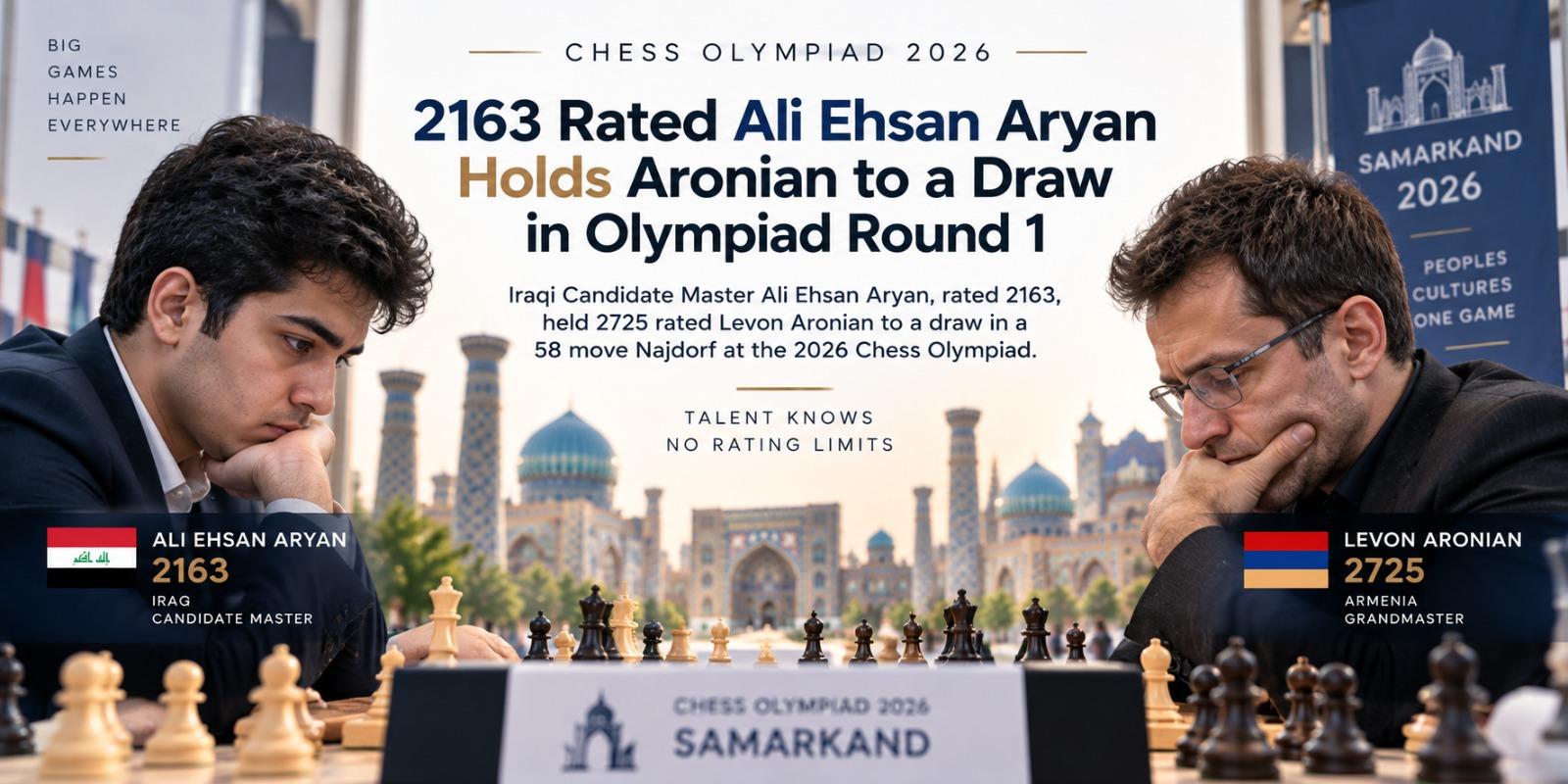
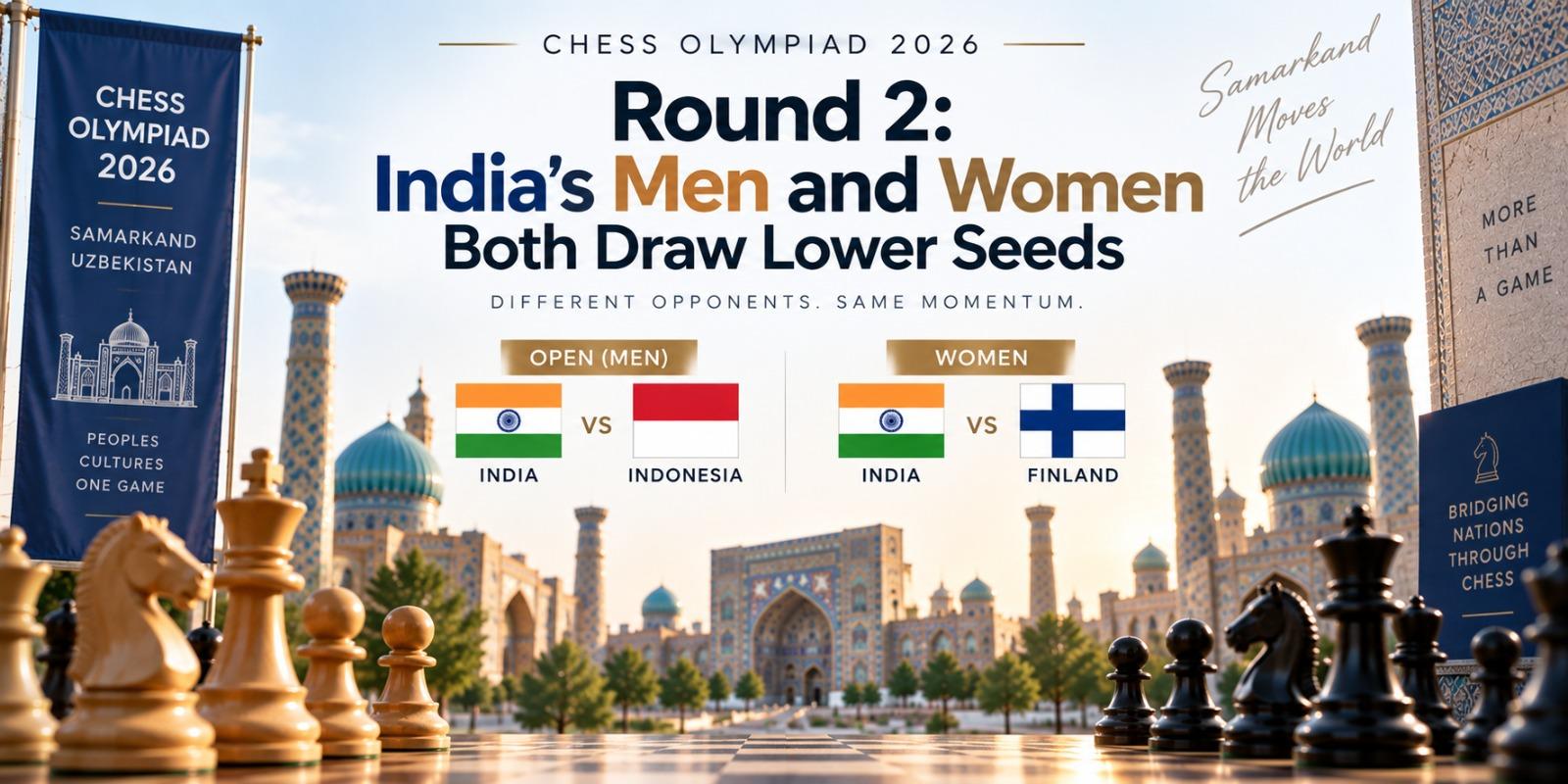
Today, the event has grown into a global sporting spectacle. The 2026 Olympiad in Samarkand, Uzbekistan, has a confirmed field of 400 teams across the Open and Women's competitions, making it the largest edition in the event's history by the confirmed registration figures announced by FIDE before the tournament.
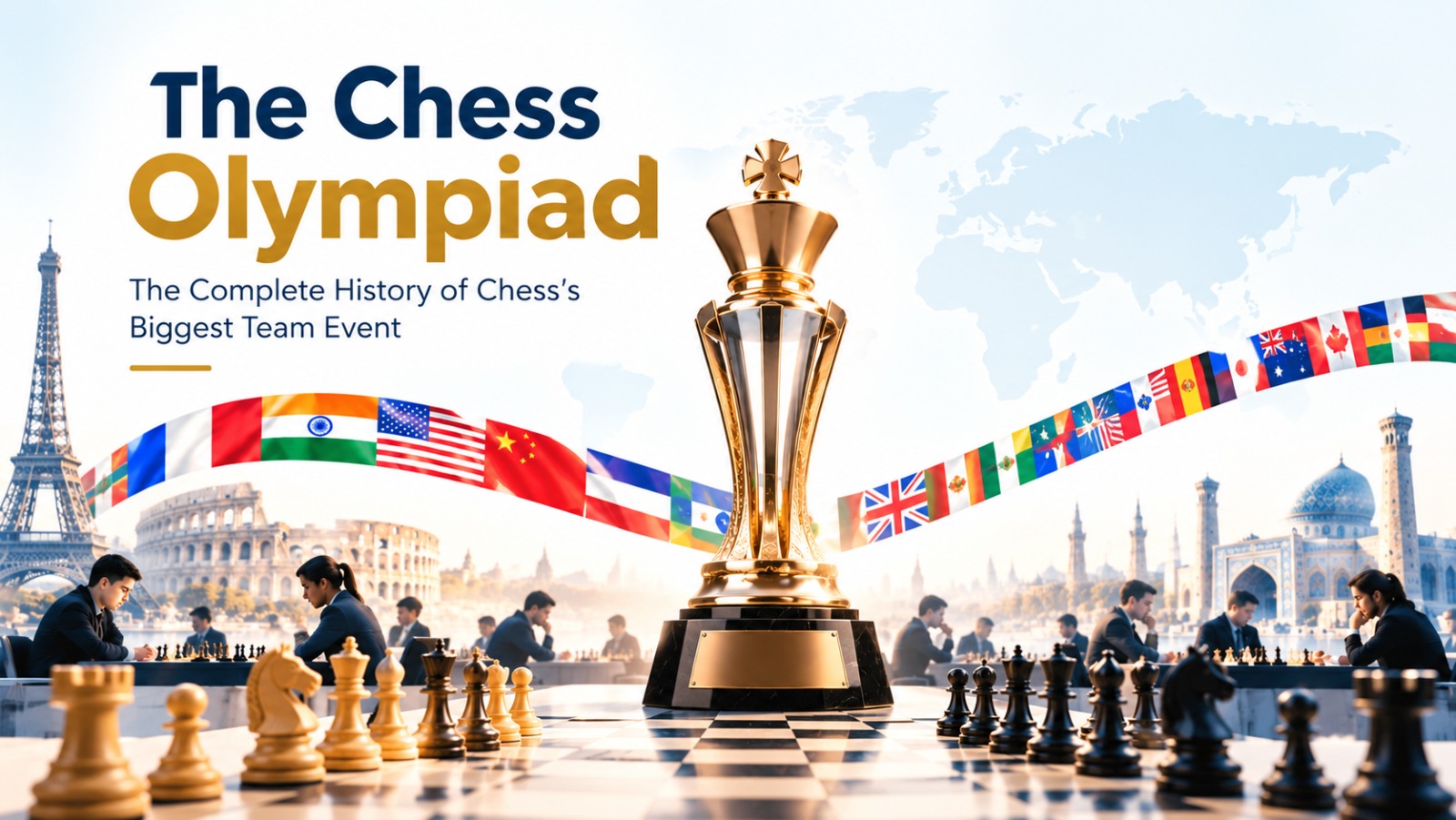
What Exactly Is the Chess Olympiad?
The Chess Olympiad is a biennial international team tournament organised by FIDE. National chess federations send teams to represent their countries, and those teams compete over a series of rounds to determine the strongest national team in the tournament.
It is important to understand one thing immediately: despite its name, the Chess Olympiad is not part of the Olympic Games organised by the International Olympic Committee. The word "Olympiad" reflects the international, national-team character of the competition.
FIDE regulations describe the Chess Olympiad as its principal team contest. The modern competition consists of two sections, Open and Women, with both normally taking place at the same venue and during the same period.
The Open section is open to players of any gender. The Women's section is a separate competition for women's national teams.
That distinction matters because the Open section is not officially a men's-only championship. Women can and have competed in the Open Olympiad, including some of the strongest female players in chess history.
Where Did the Chess Olympiad Actually Begin?
The history of the Olympiad is slightly more complicated than the official numbering suggests.
The first official Chess Olympiad was held in London in 1927. But the story really begins three years earlier in Paris.
During the 1924 Paris Olympic Games, chess organisers attempted to have chess included as an official Olympic sport. The effort failed, partly because of difficulties surrounding the distinction between amateur and professional players under the Olympic rules of the time.
Instead, an international chess tournament was organised in Paris alongside the Olympics. It is now generally regarded as the first unofficial Chess Olympiad.
Czechoslovakia won that event, but the result was only one part of its historical importance. The International Chess Federation was founded in Paris during the same period. FIDE's own historical records date its establishment to July 20, 1924, while the unofficial tournament was taking place.
That gives the Olympiad an unusual origin story. The organisation that would eventually govern international chess was born at almost exactly the same moment as the international team competition that would become one of its most important events.
The First Official Chess Olympiad in 1927
The first official Chess Olympiad took place in London in 1927.
Sixteen countries participated, and Hungary won the competition. The winning team received the Hamilton-Russell Cup, the trophy that remains associated with the Open Chess Olympiad more than a century later.
The early Olympiads did not follow the perfectly regular two-year cycle that fans know today. Events were sometimes held annually and sometimes at irregular intervals.
World War II eventually brought the competition to a halt. The 1939 Olympiad in Buenos Aires was the last pre-war edition, and the international chess community did not return to the Olympiad until 1950 in Dubrovnik. From that point onward, the event settled into the regular two-year rhythm that has become one of its defining traditions.
Why the Olympiad Is Not a Normal Chess Tournament
The biggest difference between the Olympiad and most elite chess tournaments is simple: players are competing as a team.
In a normal individual tournament, your result belongs entirely to you. If you win, you gain the points. If you lose, you lose the points.
At the Olympiad, four games are being played simultaneously for each team match. One player can win, another can draw, a third can lose and the fourth can still decide the match.
This changes the psychology of the game.
A player who would normally fight for a win might be perfectly happy to take a draw if that result secures a team victory. Another player might have to take enormous risks because their team is behind and needs a win to save the match.
Suddenly, the best move is not always the move that maximises your own individual result. It can be the move that gives your team the best chance of winning the match.
How Does the Chess Olympiad Format Work?
The modern Olympiad uses a team Swiss system. Instead of every team playing every other team, teams are paired round by round against opponents with similar tournament records.
This became necessary as participation expanded. Early Olympiads could use formats in which every team played the others, but such a system becomes impossible once hundreds of teams are involved.
FIDE adopted the Swiss system for the Olympiad in 1976. The format allows an enormous number of teams to compete while still producing a meaningful final standings table.
The 2026 Open and Women's competitions each consist of 11 rounds. Teams have four players competing in each match, with one reserve player available.
How Are Olympiad Matches Scored?
This is one of the most important things for a new Olympiad viewer to understand.
The individual games produce the board score, but the team standings are based primarily on match points.
A team receives two match points for winning a match, one match point for drawing and zero for losing.
For example, if a team wins two games, draws one and loses one, its board score is 2.5 to 1.5. That is enough to win the match, so the team receives two match points.
This system makes the team result more important than simply adding up individual victories.
Board points remain important for tie-breaking and for understanding individual performances, but the match result is the central element of the competition.
Why Board Order Matters So Much
One of the most interesting strategic elements of Olympiad chess happens before the games even begin.
Teams have to decide which player goes on which board.
The first board is usually occupied by the team's highest-rated or most established player, but captains have considerable strategic considerations to weigh. A particular player may have a favourable matchup against the opponent's second board. Another player may be especially strong against a certain opening or style.
The captain therefore has to think about the entire match rather than individual rankings.
Imagine a team has one clear superstar and three slightly lower-rated players. The captain may expect the top board to be difficult, but believe the other three boards offer excellent winning chances. In another match, the strategy might be the opposite.
That is why Olympiad chess is not simply four individual games happening at the same time. It is a coordinated team competition.
The Trophies of the Chess Olympiad
There are three major trophies associated with the modern Olympiad.
The Hamilton-Russell Cup
The Hamilton-Russell Cup is awarded to the winner of the Open section.
It was donated by English chess patron Frederick Hamilton-Russell for the first official Olympiad in London in 1927. The trophy is not permanently owned by the winning federation. The winning team keeps custody of it until the next Olympiad, when it passes to the new champion.
That makes the cup itself a travelling piece of chess history. The names of successive winners form a record of the strongest team chess nations across generations.
The Vera Menchik Cup
The Women's Olympiad has its own historic trophy, the Vera Menchik Cup.
It is named after Vera Menchik, the first Women's World Chess Champion and one of the pioneering figures in women's competitive chess.
FIDE's historical records identify the first Women's Chess Olympiad as having taken place in Emmen, Netherlands, in 1957, with the Soviet Union winning the inaugural competition.
The Nona Gaprindashvili Trophy
The third major trophy is the Nona Gaprindashvili Trophy, awarded for the best combined performance by a federation across the Open and Women's competitions.
That makes the trophy particularly interesting because it rewards overall national depth rather than performance in just one section.
A country needs strong teams in both competitions to compete for it. The award is named after Nona Gaprindashvili, one of the great champions in women's chess history. FIDE's regulations confirm that the trophy is awarded for the best combined performance across the Open and Women's Olympiads.
The Soviet Union: The Greatest Olympiad Dynasty
Any serious history of the Chess Olympiad eventually reaches the Soviet Union.
The Soviet chess machine dominated the Open Olympiad for decades. The Soviet Union won 18 Open gold medals, an extraordinary record that remains one of the defining achievements in Olympiad history.
The reason for that dominance was not simply one great player.
The Soviet Union had enormous depth. World champions and future world champions could appear on different boards for the same team. Players such as Mikhail Botvinnik, Vasily Smyslov, Mikhail Tal, Tigran Petrosian, Boris Spassky, Anatoly Karpov and Garry Kasparov all represented the Soviet Union at various points.
That created an almost impossible problem for opposing teams. Even if you managed to neutralise the strongest player, there were still several world-class grandmasters waiting on the other boards.
Tigran Petrosian's Extraordinary Olympiad Record
Tigran Petrosian was one of the greatest team players in chess history.
He played in ten Olympiads for the Soviet Union between 1958 and 1978 and won nine team gold medals. His consistency was extraordinary, with only one loss across 129 Olympiad games according to historical records.
Petrosian's style was built around defence, prophylaxis and positional control. That made him particularly valuable in team chess, where avoiding unnecessary losses can be just as important as creating winning chances.
His Olympiad record is a perfect illustration of an important truth about team competition: reliability can be just as valuable as brilliance.
Vasily Smyslov and Mikhail Tal
Vasily Smyslov also built an extraordinary Olympiad record, winning nine team gold medals.
Mikhail Tal, meanwhile, brought his famous attacking style to the event and produced one of the most impressive individual scoring records in Olympiad history.
Tal played 101 Olympiad games and scored 81.2 percent, according to FIDE's historical records. He also collected numerous individual board medals during his career.
Tal's record is particularly striking because his style was so different from the cautious approach many people associate with team chess. He could create complications, calculate deeply and turn seemingly ordinary positions into tactical battles.
Garry Kasparov and the Soviet to Russian Transition
Garry Kasparov belongs to both the Soviet and post-Soviet chapters of Olympiad history.
He represented the Soviet Union before its dissolution and later represented Russia. Across his Olympiad career, his teams consistently competed at the highest level, and he accumulated eight team gold medals.
Kasparov's career demonstrates how the Olympiad survived one of the biggest political changes in modern European history. The Soviet Union disappeared, but Russia immediately became one of the major powers in international chess.
What Happened After the Soviet Union Collapsed?
The end of the Soviet Union changed the chess map.
Russia inherited much of the Soviet chess tradition and remained a major force. But the dissolution also created several new chess federations with their own strong traditions and generations of elite players.
Ukraine became a major Olympiad power. Armenia developed one of the strongest team traditions in modern chess. China became dominant in the Women's section and increasingly powerful in the Open section. Azerbaijan produced world-class players and medal-winning teams.
The Olympiad became more geographically diverse, and that diversity is one of the defining characteristics of modern team chess.
Armenia's Remarkable Olympiad Story
Armenia's rise is one of the most remarkable stories in modern Olympiad history.
With a relatively small population compared with the largest countries competing at the Olympiad, Armenia built a team capable of challenging the strongest chess nations in the world.
Much of that success was associated with a generation led by Levon Aronian. Armenia won the Open Olympiad in 2006, 2008 and 2012, establishing itself as one of the great team powers of the era.
Those victories showed that Olympiad success is not determined simply by population size. A country with a strong chess culture, excellent coaching and a generation of elite players can compete with much larger nations.
China and the Expansion of Global Chess Power
China's emergence as a chess superpower is another major part of the modern Olympiad story.
The Chinese Women's team became one of the dominant forces in the Women's Olympiad, while the Open team also developed into a serious contender.
China's rise reflects a broader trend in chess. The strongest teams are no longer concentrated in only a few European countries. Elite chess has become genuinely global.
That is exactly what the Olympiad was designed to showcase.
The Women's Chess Olympiad
The first Women's Chess Olympiad was held in Emmen in 1957, with the Soviet Union winning the title.
Over the decades, the Women's competition has developed its own extraordinary history, producing legendary players and some of the most successful national teams in chess.
One of the most interesting players in this history is Judit Polgar.
Polgar competed primarily in the Open section rather than the Women's Olympiad and became the strongest female chess player in history by rating. Her Olympiad career is unusual because she also won medals in the Women's Olympiad before choosing to compete against the strongest overall field.
Her career became an important symbol of the fact that the Open section is not restricted by gender.
Judit Polgar and the Open Olympiad
Judit Polgar's presence in the Open Olympiad is one of the most interesting stories in the competition's history.
Rather than build her career around the Women's section, she competed primarily in the Open competition against the world's strongest players.
She demonstrated that a female player could compete successfully at the highest level of the overall game, including in team competition against elite grandmasters.
Her career remains one of the most important examples of how the Open Olympiad can bring players together regardless of gender.
The COVID-19 Pandemic Changed the Olympiad
The Chess Olympiad has survived wars, political changes and major changes to the way chess is played. Then came the COVID-19 pandemic.
The 2020 over-the-board Olympiad could not take place as planned. FIDE responded by creating an Online Chess Olympiad, using rapid time controls and online play.
A second online edition followed in 2021.
FIDE's Chess Museum records both online Olympiads as an unusual chapter in the history of the event.
The online editions were very different from the traditional Olympiad. Instead of thousands of players travelling to one host city, teams played remotely. Connectivity and technical issues became part of the competition in a way that would have been unimaginable in earlier decades.
When over-the-board chess returned, the traditional Olympiad atmosphere returned with it.
India's Rise to the Top
Few recent stories have changed the landscape of the Chess Olympiad as dramatically as India's rise.
India has a long chess tradition, but the depth of its current generation has taken the country to another level.
Players such as Gukesh Dommaraju, R Praggnanandhaa, Arjun Erigaisi, Nihal Sarin and Vidit Gujrathi have helped create a generation capable of competing with the strongest national teams in the world.
The 2022 Olympiad in Chennai was a major turning point. India fielded two teams in the Open section, and the second Indian team won bronze. The tournament itself set a participation record at the time, with 188 Open teams representing 186 FIDE member countries.
India's Historic Double Gold in 2024
The next chapter came in Budapest in 2024.
India won the Open Olympiad, capturing its first gold medal in the Open section. The Indian Women's team also won gold.
Winning both sections at the same Olympiad was a historic achievement for Indian chess and demonstrated the depth of the country's development across both men's and women's competition.
The 2024 Olympiad also set a new participation record at the time, with 188 teams in the Open section and 169 in the Women's section.
The 2026 Chess Olympiad in Samarkand
The 46th Chess Olympiad is being played in Samarkand, Uzbekistan, in September 2026.
The host city is one of the historic centres of Central Asia and was an important crossroads on the ancient Silk Road. For the chess world, Samarkand is now the meeting point for one of the largest international team competitions ever held.
FIDE confirmed 208 teams for the Open section and 192 teams for the Women's section before the tournament, producing a combined figure of 400 teams and surpassing the previous combined record of 380 teams set in Budapest in 2024.
At the opening press conference, FIDE reported 208 Open teams and 191 Women's teams participating, illustrating how final participation figures can differ slightly from earlier confirmed registration numbers.
The Open and Women's competitions are being played over 11 rounds using the Swiss system. Each team has four players competing in a match plus one reserve. The opening ceremony was held on September 15, with the first round on September 16 and the final round scheduled for September 27.
India entered Samarkand as the defending Open champion after its historic Budapest victory. The host nation Uzbekistan is also among the major teams to watch after winning the Open title in Chennai in 2022.
Why Defending an Olympiad Title Is So Difficult
Winning one Olympiad is extremely difficult. Winning two in succession requires a team to remain at the highest level for an entire additional two-year cycle.
The challenge is not only about rating.
Players can improve, decline, change form, face injuries or simply have different tournament schedules. Young players may suddenly become stronger. Rival teams can improve their lineups. Opening preparation changes constantly.
And then there is the format itself.
A team has to perform consistently across eleven rounds. A single bad match can create a significant gap in the standings, while a brilliant run in the middle of the tournament can completely change the medal race.
This is why Olympiad success is about depth and consistency as much as individual brilliance.
The Importance of the Reserve Player
The reserve might be the least visible member of an Olympiad team, but the position can become extremely important.
With a long tournament involving eleven rounds, fatigue becomes a factor. Captains may decide to rotate players, and a reserve can suddenly find themselves playing a crucial match.
This is another reason why national teams need more than four great players. The fifth player can be strategically valuable over the course of a two-week tournament.
Why Draws Can Be More Valuable Than Wins
One of the most interesting aspects of team chess is that the value of a result depends on the situation of the entire match.
Suppose a team is already leading 2 to 1 with one game remaining. The player on the final board may have the option to force a draw in a difficult position.
In an individual tournament, they might continue searching for a win because every half-point matters to their own score.
At the Olympiad, the calculation is different. A safe draw could secure two match points for the team.
Now reverse the situation. If a team is losing 1.5 to 2.5, a player may need to take risks because a draw would not save the match.
That is the essence of team chess. The correct decision depends not only on the chessboard in front of you, but on what is happening across the other boards.
The Chess Olympiad Is Also a Test of Team Captains
Players receive most of the attention, but captains play an important role behind the scenes.
They can help with preparation, manage the lineup, determine board order and make strategic decisions throughout the tournament.
A captain also has to manage people. Four or five elite players can have different personalities, preparation habits and emotional responses to wins and losses.
Over eleven rounds, maintaining concentration can be just as important as finding the right opening preparation.
The Olympiad Is Bigger Than the Elite Players
It is easy to watch an Olympiad and focus only on the top seeds.
But one of the most important features of the competition is its enormous range of playing strength.
A world-class grandmaster can be sitting at one board while an ambitious international master from a developing federation is playing on another. Players from small federations get the opportunity to face opponents they might never encounter in ordinary tournaments.
For many participants, simply representing their country at the Chess Olympiad is one of the greatest achievements of their chess career.
This is what makes the event different from an elite invitational tournament. The Olympiad is designed to bring the entire chess world together.
How the Chess Olympiad Has Changed Chess
The growth of the Olympiad mirrors the growth of international chess itself.
The first official edition had only 16 participating countries. Modern Olympiads involve hundreds of teams.
Technology has changed the experience as well. Early Olympiads were followed through newspapers and delayed reports. Today, fans can watch hundreds of games live, follow computer evaluations, study opening statistics and track standings in real time.
Preparation has changed just as dramatically. Players now arrive with enormous databases, engine analysis and teams of seconds and coaches. A preparation mistake that might once have remained hidden for years can now be analysed by thousands of chess fans within minutes.
Yet the basic idea has survived unchanged: national teams meeting at the chessboard and fighting for collective success.
Interesting Chess Olympiad Records and Facts
The Olympiad record books contain achievements that are difficult to reproduce.
The first official Chess Olympiad was held in London in 1927 with 16 participating countries.
Hungary won the first official Open Olympiad.
The Soviet Union won 18 Open Olympiad gold medals.
The first Women's Chess Olympiad was held in Emmen in 1957.
The Soviet Union won the first Women's Olympiad.
The Hamilton-Russell Cup is the trophy for the Open champion.
The Vera Menchik Cup is the trophy for the Women's champion.
The Nona Gaprindashvili Trophy recognises the best combined federation performance.
The Olympiad was interrupted by World War II.
FIDE held special online Olympiads in 2020 and 2021 during the COVID-19 pandemic.
The 2022 Olympiad in Chennai set a participation record at the time with 188 Open teams.
The 2024 Olympiad in Budapest surpassed that record with 188 Open teams and 169 Women's teams.
The 2026 Samarkand Olympiad was confirmed with 400 teams across the two main sections, surpassing the previous combined record.
These numbers only tell part of the story. The more interesting records are often hidden inside the games themselves: unbeaten streaks, extraordinary individual performances, dramatic final-round victories and matches decided on the last board.
Why the Chess Olympiad Matters
The World Championship determines the world's individual champion. Major open tournaments produce individual winners. Candidates events determine who gets a chance to challenge for the world title.
The Olympiad does something completely different.
It brings the chess world together as teams.
A player who normally competes against another grandmaster can suddenly become their teammate. A reserve player can become a match winner. A draw that would be insignificant in an individual tournament can become the result that wins a gold medal.
The event also gives smaller chess nations a stage alongside the biggest federations in the world.
That combination of elite competition and global participation is what gives the Olympiad its unique identity.
From Paris 1924 to Samarkand 2026
The history of the Chess Olympiad is ultimately a history of how chess became a truly global sport.
It began with an unofficial tournament alongside the 1924 Paris Olympics. FIDE was created during that same historic period. Three years later, the first official Olympiad took place in London.
The event survived the disruption of World War II, grew through the Cold War, witnessed the dominance of the Soviet Union, adapted after the breakup of that federation and welcomed new powers from every part of the world.
It survived a global pandemic by moving online and then returned to the traditional over-the-board format.
And now it has reached Samarkand, where hundreds of teams are once again adding their names to a competition that has been part of international chess history for more than a century.
Final Takeaway
The Chess Olympiad is much more than another tournament.
It is a combination of individual skill, team strategy, national pride, preparation, endurance and chess history. It rewards players who can perform under pressure, captains who can manage an entire team and federations capable of developing enough depth to compete across several boards.
That is why the greatest Olympiad teams are remembered differently from great individual tournament winners. Their achievements belong not to one player, but to an entire generation of players representing the same chess nation.
From Hungary's victory in the first official Olympiad to the extraordinary Soviet dynasty, from Armenia's golden generation to China's rise, from India's historic double success in Budapest to the record-breaking 2026 edition in Samarkand, the Chess Olympiad continues to evolve.
The board is still the same. The pieces are still the same. The rules remain the same.
But when four players sit down knowing that their results will be combined with those of their teammates, every move carries a different kind of weight.
That is the Chess Olympiad.
A century of chess history, played one board at a time.